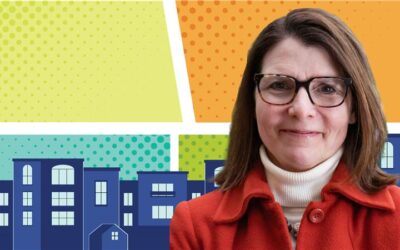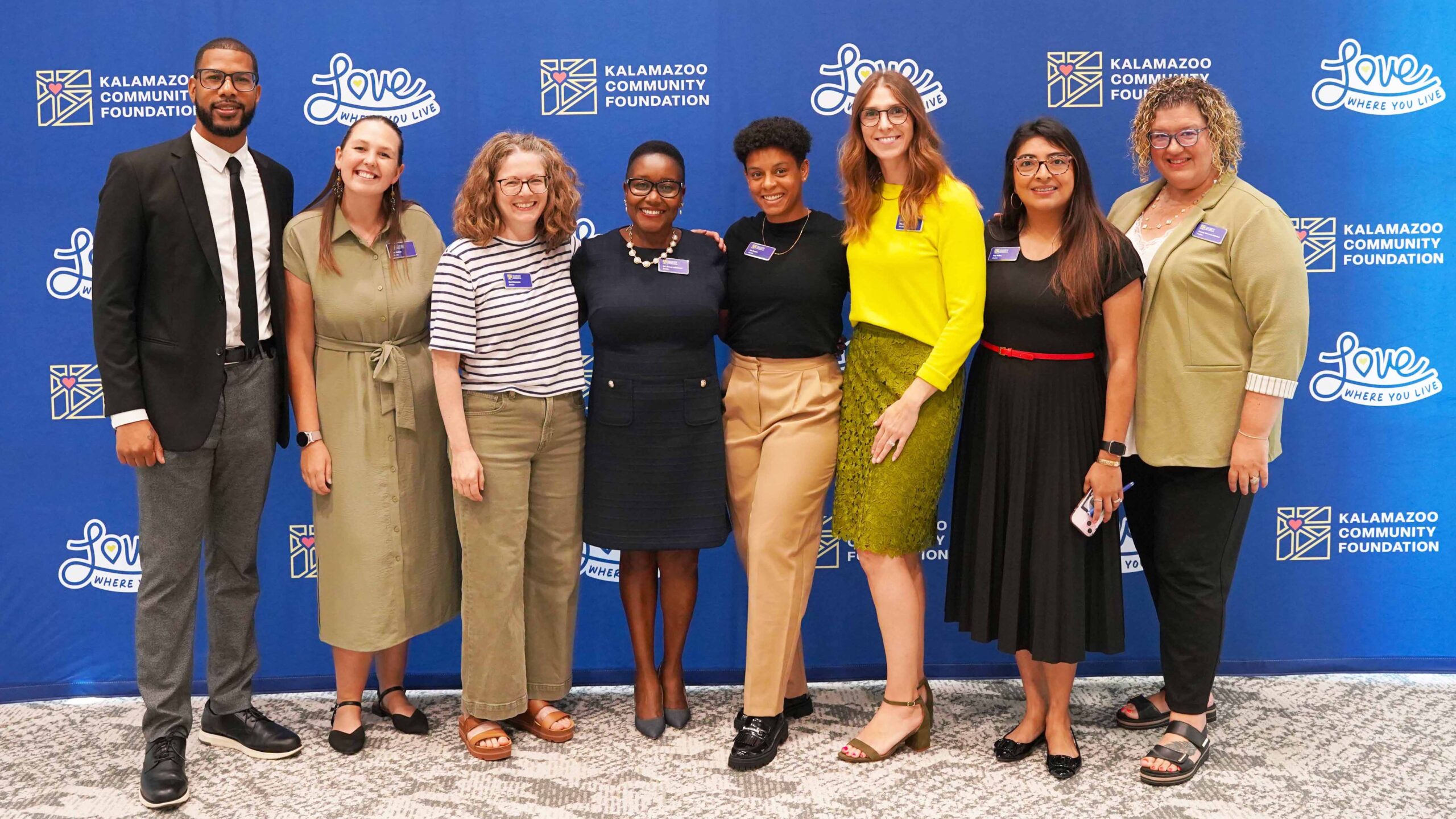
An Interview With Chief Community Impact Officer, Alyssa Stewart
 As KZCF approached its centennial, this moment became a powerful opportunity to reflect, realign and recommit to our mission of advancing racial, social and economic justice across Kalamazoo County.
Looking back with Alyssa, 2024 was a year of big impact and bold evolution, full of community milestones and critical feedback that helped shape the foundation’s future.
What Wasn’t Working
This past year challenged KZCF to evolve, not because the work stopped, but because the needs of our community and the people we serve were calling for something more.
What are the most urgent or persistent challenges people and families in Kalamazoo County are facing, and how do those challenges shape the role KZCF needs to play?
“Too many families in Kalamazoo County are working one, two, sometimes even three jobs and still can’t afford the basics — rent, childcare, food, transportation. The cost of living is rising faster than wages, and the tools to reduce debt or build wealth aren’t equally available to everyone. That lack of access creates major disparities and ultimately limits choice.
Choice and access are signs of a truly equitable community, and we know household financial stability affects everything: education, health, where you live, even whether you can buy fresh food. That’s why one of our boldest moves in 2024 was naming wealth attainment as a top priority. Financial stability and upward mobility are absolutely essential to building a vibrant, thriving community.”
At the same time, what were you hearing from the community that signaled KZCF needed to evolve internally and externally?
“We’re constantly learning from our partners, neighbors and nonprofit leaders — formally through surveys and focus groups, and informally just by being in community. One thing came through clearly: we had work to do in being more transparent and efficient, and explicit about how to access funding.
We also heard confusion around multi-year grants. For a long time, they didn’t exist. When we test-piloted them, the process still felt mysterious — who got selected and why? There was a sense of uncertainty, even among longtime grantees.
In 2025, we launched a much clearer grant guide that outlines our four priority areas and four distinct grant types, including multi-year general operating support. We also shared how much money is available in each category and how we make funding decisions. One of the biggest shifts, significantly increasing multiyear grants, was based directly on partner feedback. It supports their stability, reduces time spent writing grants, and lets all of us stay focused on the work that matters.”
Restructuring to Meet the Moment
In so many ways, 2024 was a transformational year for KZCF. With a new president and CEO, a shift in focus areas and a refreshed brand heading into our centennial, it marked a bold step into the future.
But we want to recognize something just as important: the work never stopped. This wasn’t a year of pause, it was a year of progress. Even as the organization restructured, real impact was happening across the community — What milestones from 2024 are you most proud of?
“We distributed hundreds of grants and scholarships across the county, including Emergency Scholarships that helped students stay on track when life threw them curveballs.
We also remained nimble and responsive to urgent needs. When tornadoes hit our region, we activated our Community Urgent Relief Fund to deploy support quickly, partnering with incredible local organizations to help families recover.
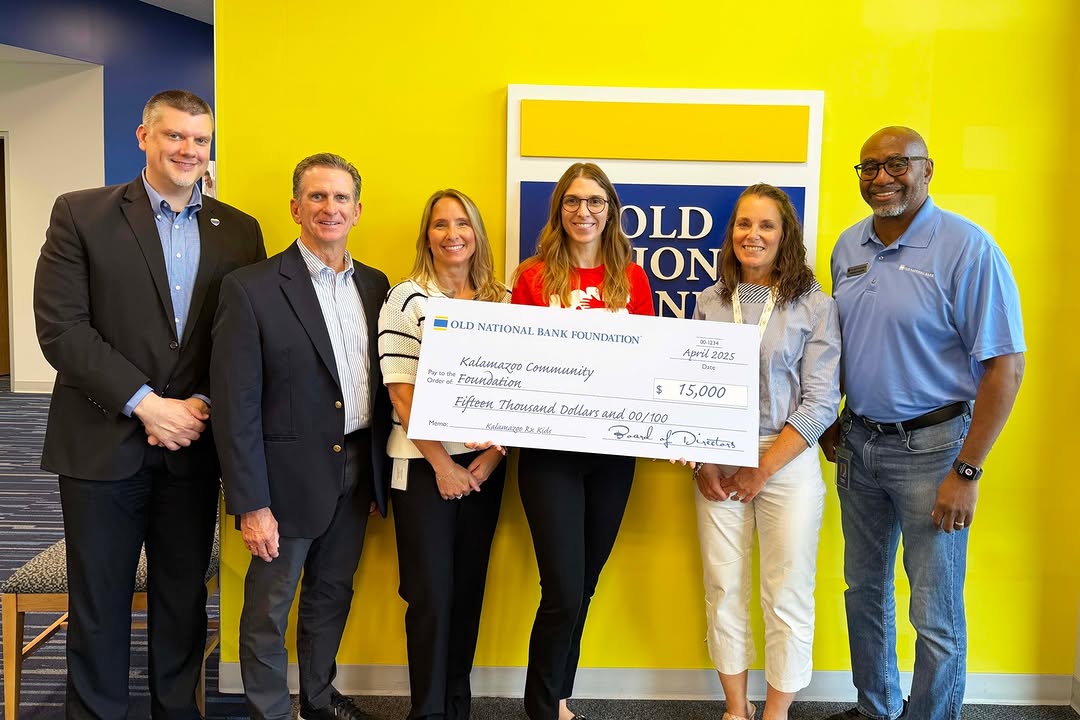 In total, we granted nearly $25 million in 2024, which was on par for the organization. So even while we were taking bold steps toward the future, the volume and impact of our work remained strong. That’s something I’m really proud of.
It speaks to our “both/and” approach: holding a long-term vision for generations to come while responding to the urgent needs right in front of us. Whether it’s COVID, community violence or natural disasters, we’re here to serve through it all.”
How did shifting from broader areas like equity and education to the more focused WHEN priorities — Wealth, Housing, Education, and Neighborhoods — help you respond more directly to community needs?
“The WHEN priorities were a major outcome of our strategic reset. They emerged from everything we learned over the past several years — our equity and education work, community data, social determinants of health — all boiled down to something simpler, more aspirational.
We wanted to move away from equity being treated like a standalone goal. Instead, it’s now embedded across all four priorities. Because the truth is: none of these aspirations — financial security, safe housing, strong schools, vibrant neighborhoods — can be achieved for everyone unless equity is at the foundation. Unless barriers are removed, unless systems are made more fair, we won’t truly get there.
 WHEN also gives people something to connect with personally. These are things we all want for our families, no matter where we live in Kalamazoo County. It’s unifying, and it brings clarity for our partners, helping them see where their work fits and ladders up to a shared vision for the future.
We also ask something important of our funded partners: a demonstrated commitment to reducing barriers and increasing access. But we don’t position ourselves as the authority on equity. We’re learning too. We’ve benefited so much from the wisdom of our partners, and we’ll always be on that journey with them — imperfect, open and committed.”
What changes did you make in 2024 to better align your outward presence with your mission? And how are things like grant cycles, reporting and communication evolving to serve your community more effectively?
“We’ve long been committed to centering Black, indigenous, and people of color in our impact work, but in recent years, we weren’t collecting enough data to truly measure whether our dollars were reaching those communities in equitable ways. In 2024, we changed that. We launched a new reporting process that collects both demographic and geographic data from grantees and scholarship recipients. That helps us understand who we’re serving and where, because need exists far beyond city limits. These new tools keep us accountable to the community and to the donors who trust us to steward their resources.
We also rolled out our Mobilizing Grants, a major evolution in how we support community change. While most of our grantmaking is responsive, these new grants are proactive. They allow us to identify one transformative, communityrooted project each year and fund it with up to $1 million. It’s about getting big ideas across the finish line, especially ones that could unlock matching funds or catalyze momentum that wouldn’t happen otherwise.
Finally, we improved how we communicate. We hosted virtual town halls to share updates and gather real-time feedback, translated our grant guide into Spanish and simplified how people navigate our funding opportunities. Everything we’ve done — from our rebrand to our website to reporting to grantmaking — is about building trust, creating clarity and showing up in ways that truly serve.”
2024 also laid the groundwork for a bold, long-term strategy. Can you walk us through KZCF’s new five-year strategic plan? What does the “Get, Grow, Give, Gather, Support” framework help you focus on, and what initiatives are already underway to bring it to life?
“I love the simplicity of this framework. After 100 years of work, it distills what we do to its essence: We GET resources from donors and community partners. We GROW them through strong investments. We GIVE them out in alignment with our priorities. We GATHER people and ideas to listen, learn, and build shared purpose. And we SUPPORT through relationships, infrastructure, and long-term commitment.
It’s not just a plan, it’s a filter. Every strategy we pursue now gets held up to that lens: Does this advance one of our core practices? Does it serve our values and vision?
The WHEN priorities are deeply woven into this. We see three to four times more demand for grants than we have dollars to give, so part of our long-term plan includes growing endowed funds so we can give more and better match the scale of community needs.
The “Gather” piece is especially meaningful. It’s about creating space for real connection and learning. Whether that’s a town hall, a community meeting, or just sharing space and stories, this is how we stay rooted in what people are experiencing: what’s working, what’s not, and whether we’re getting closer to the aspirations behind Wealth, Housing, Education, and Neighborhoods.
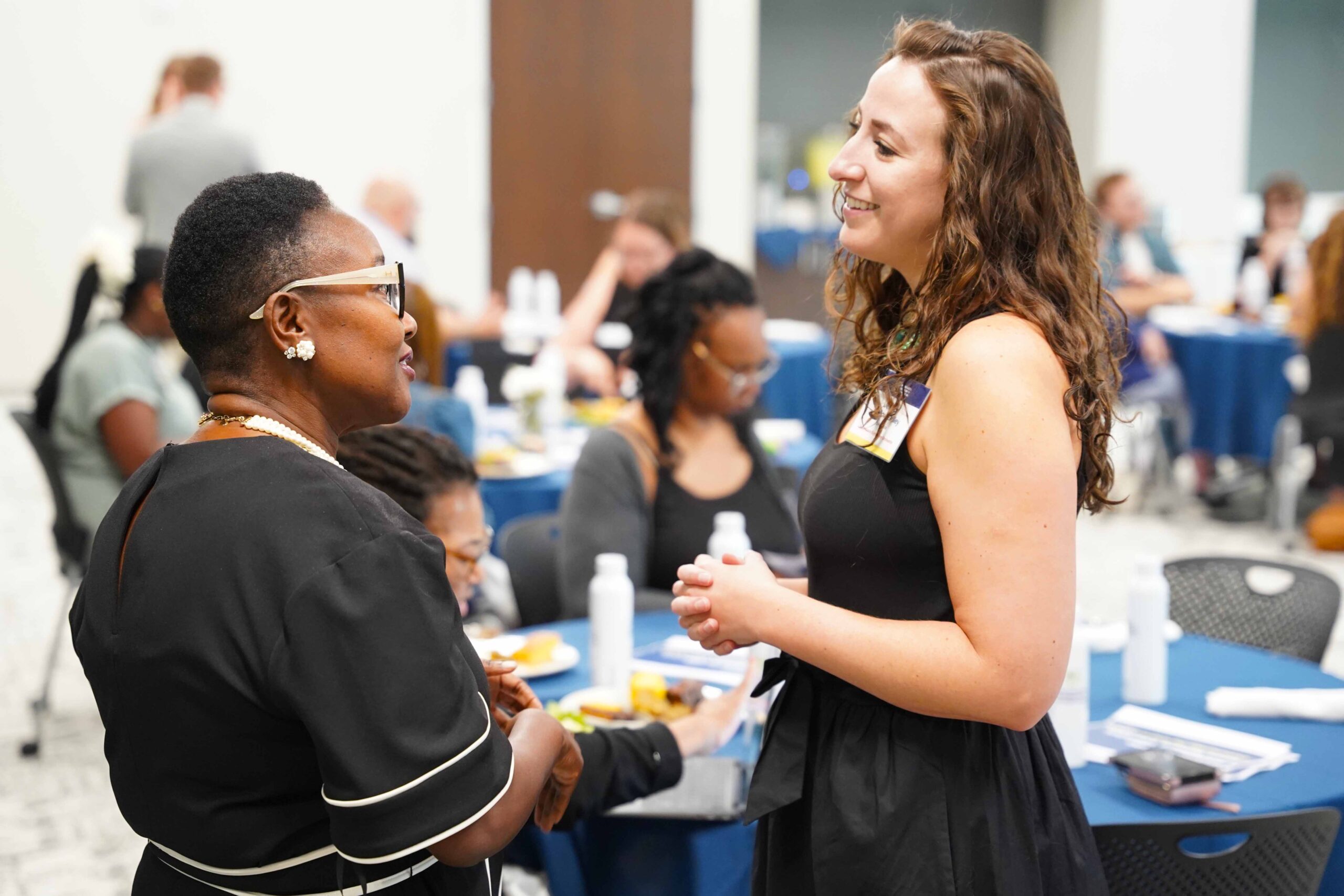 Ultimately, everything we do comes back to people. Systems matter. Structures matter. But it’s people who feel the outcomes and people who shape the solutions. That’s what this strategy is designed to honor.”
A Just and Joyful Future
2024 wasn’t just a year of restructuring, it was a year of renewed belief in what’s possible. Where are you already seeing signs of transformation, and how are people responding to the shifts you’ve made?
“We’ve made significant changes in 2024, and while some of the ripple effects may take time to fully show up, we’re already seeing the groundwork take root.
Our team has really rallied behind the WHEN priorities. That shared vision has given us clarity and a sense of collective purpose that’s energizing everything we do. We’re hearing a lot of positive feedback, especially around the shift to multi-year funding. That change alone has brought a new level of stability and trust into our relationships with grantees.
What excites me most is knowing that the impact will show up in many forms. It might look like a student reaching their educational goals because of a scholarship. Or a family rebuilding after a disaster. Or a neighborhood enriched by policy change or new investment. Some of that transformation will be visible — some will be quiet and deeply personal. Some may never be directly traced back to us, but we have faith in the work and in the community. We’ve been here for 100 years, andnd with every new step forward, we’re showing up differently, more intentionally, and more in tune with the future we all deserve.”